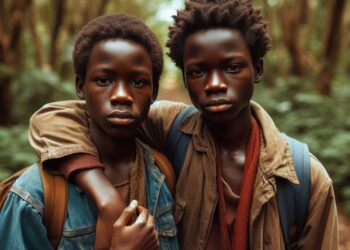









Once upon a time, in the heart of Uganda, there lived a little girl named Asiimwe. She hailed from a small village nestled at the edge of the Bwindi Impenetrable Forest, a place known for its lush greenery and the majestic mountain gorillas that roamed its depths. Asiimwe’s name, meaning “Glory,” reflected the pride and hope her parents had for her future.
But one fateful year, a dreadful plague swept through the land. It started as whispers carried on the wind, rumors of a mysterious illness spreading from village to village. The people called it “Ebola,” swept through the region. It struck suddenly, with high fevers, intense weakness, and bleeding. The villagers were terrified as one by one, their loved ones fell ill and died. No one knew where it came from, but its effects were devastating. The Ebola plague spared no one; men, women, and children alike fell victims. Villages that once bustled with life turned silent, the vibrant songs and dances of the Bakiga people fading into mysterious stillness.
Asiimwe’s village was not spared. Her family and friends succumbed to the illness one by one until she was the only one left. Lonely and heartbroken, Asiimwe wandered away from her desolate home, following the narrow path that led to the mighty River Ishasha.
She reached the river after days of walking, her feet sore, and her heart heavy. The sight of the river, stretching endlessly before her, brought a small measure of comfort. She sat by the water’s edge, watching the sun dip below the horizon, its last rays reflecting on the calm surface.
One day, as she sat by the river, a kind fisherman named Nuwagaba found her. Moved by the sadness in her eyes, he took Asiimwe to his home near the shores of Lake Victoria. For a time, Asiimwe knew happiness again. Nuwagaba and his wife treated her like their own daughter, sharing their humble meals of fish and millet, and teaching her the ways of the lake.
But the plague was relentless. It returned, claiming Nuwagaba and his wife just as it had taken Asiimwe’s family. Once more, she found herself alone, this time by the vast waters of River Ishasha. Despair weighed heavily on her, but as she sat by the shore, something extraordinary happened.
A fish with the head of a woman emerged from the water. “Do not be afraid, little girl,” the creature said in a gentle voice. “I am a River Fairy, the spirit of River Ishasha. I have watched over these waters for centuries, and I have seen your sorrow. Let me be your friend.”
Asiimwe, though startled, felt a strange sense of peace in the River Fairy’s presence. She shared her story, and the spirit, moved by the child’s plight, offered her a chance to leave her sorrow behind.
“I can take you to my kingdom beneath the waters, a place where the Ebola plague cannot reach. But you must become like us, a fish-maiden, to survive there,” the River Fairy explained.
Asiimwe hesitated. The thought of losing her feet and becoming a creature of the river frightened her. Yet, the promise of a new life, free from the pain and loss she had known, was tempting. After much deliberation, Asiimwe agreed.
With the River Fairy’s help, the transformation began. Asiimwe’s feet turned into a shimmering tail, and her human form became that of a beautiful fish-maiden. the River Fairy guided her to the underwater kingdom, where Asiimwe marveled at the wonders beneath the surface.
She met the King of the Fish-People, who welcomed her with open arms. Asiimwe soon discovered her new role: to guard the entrance of the river, ensuring that the waters of River Ishasha remained pure and that the river carried life and prosperity to the lands beyond.
In time, Asiimwe grew into her new life, her tail becoming a radiant masterpiece, reflecting the light of the sun filtering through the water. The fishermen of Uganda began to tell stories of a giant fish with the head of a woman, glimpsed near the mouth of the river. Children would listen in awe, their imaginations captivated by the tale of the fish-maiden who protected the waters.
And so, Asiimwe found a new home and purpose beneath the waters of River Ishasha. Her story became a cherished legend, passed down through generations, reminding the people of Uganda that even in the darkest of times, hope and new beginnings can be found.
And the voice of the River Fairy echoed through the ages, “Guard the waters, little fish-maidens, for the harmony of our world depends on you.”